





Anasayfa
Laboratuvar Hakkinda
Laboratuvar imkanlari
Laboratuvar Faliyetleri
ISG
Formlar
Laboratuvar Plan
Kalibrasyon-Sertifikalar
Bakim Onarim
Laboratuvar Ekip
Iletisim
Laboratory Activities

Shaking Table

To perform real-time dynamic experiments, the uni-axis "ARI-I Shaking Table" with a plan size of 2.35 X 2.35 m was put into service in 2014. The project budget of US$ 250,000 was provided by 19 individuals and organizations, most of whom are ITU graduates. The shaking table, whose original design and production in terms of mechanics, electricity, hydraulics, and software were carried out in our country, has been used effectively since it entered into service.
Avatar

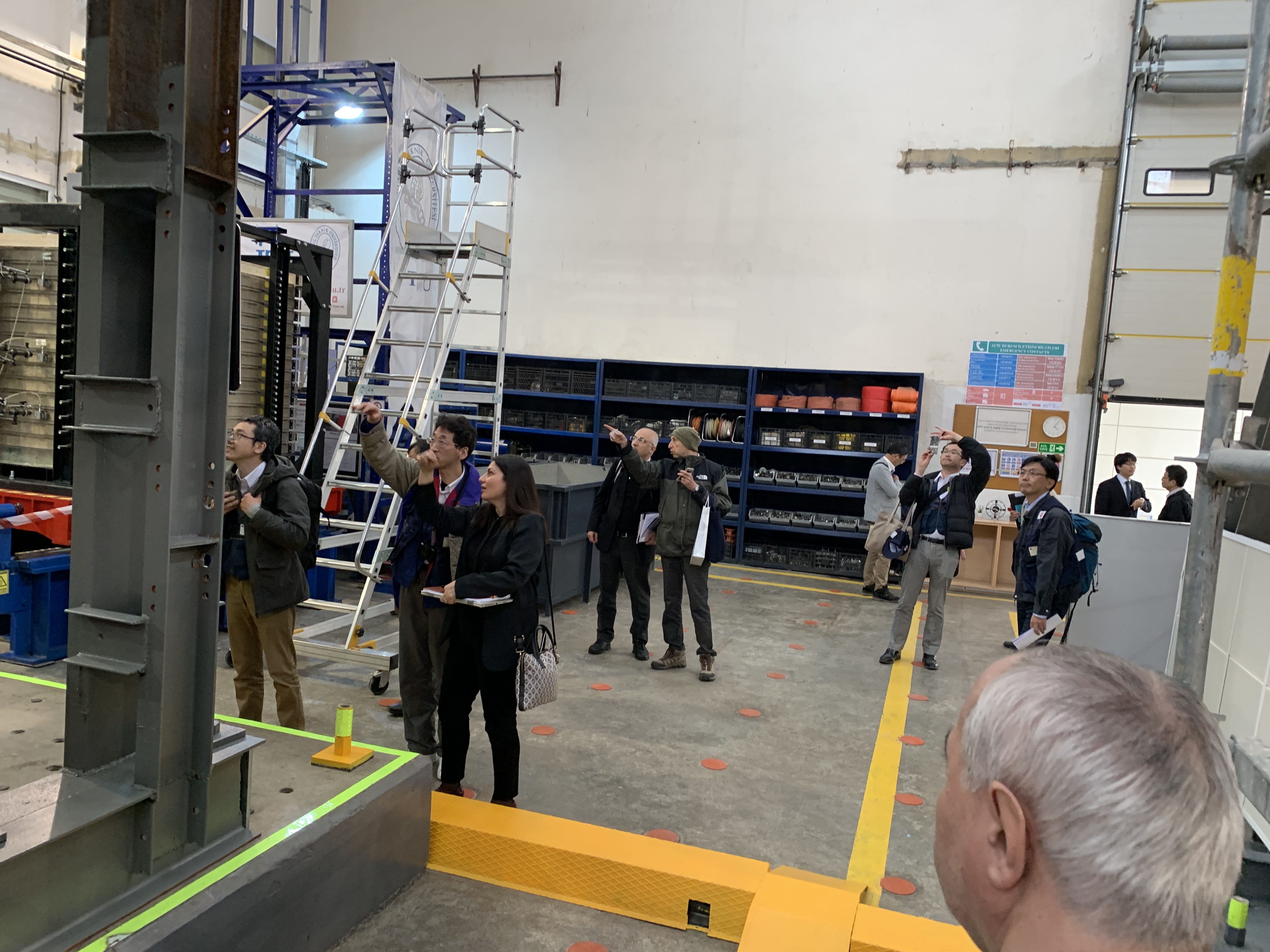
JICA, MLIT, JAPONYA BUYUKELCILIGI Laboratuvar ziyareti Mart 2023
Avatar

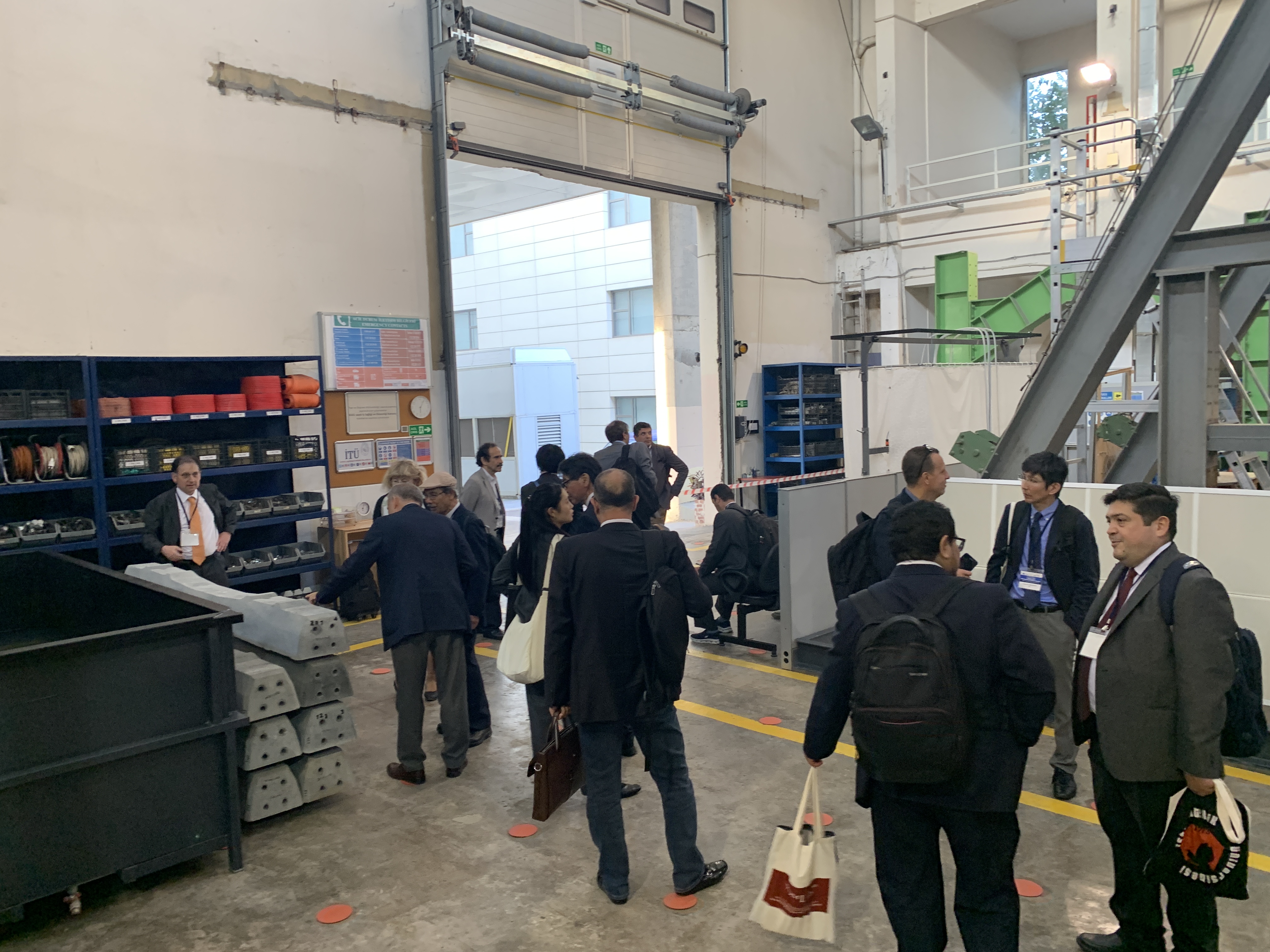
IPRED Laboratuvar Ziyareti Eylul 2023

Avatar

IPRED - ITU KONFERANS Eylul 2023

Avatar

Uluslararasi Calistay Kapsaminda Prof. Dr. Robert Englekirk ve Prof. Dr. Andre Barbosa'nin Laboratuvar Ziyareti Haziran 2024

Other Events
Copyright 2026
yapidepremlab@itu.edu.tr
As part of the TU11 STAMP project, the Memmert 105L Carbon Dioxide Curing Chamber has been acquired by the Structural and Earthquake Engineering Laboratory (STEELab) at ITU.

This advanced equipment enables precise control of curing processes under a controlled CO² environment, allowing material behavior to be investigated under more realistic and reproducible conditions.

As a key component of the STAMP project, the device will be actively utilized in the development and optimization of sustainable, low-carbon, and high-performance rammed earth construction mixtures.

This investment significantly strengthens YDMLab’s capacity in innovative, sustainable, and data-driven research. It also directly contributes to our national and international research objectives aimed at advancing low-carbon construction technologies.

?? We continue to bring science and engineering together for a more sustainable built environment.
Shake Table Tests According to IEEE 693 Standart on 170 kV and 420 kV Current and Capacitive Voltage Transformers with GFRP Composite Insulators


SLABTRACK  Fatigue Test

The "TCDD - ITU HASLAB Fatigue Testing Laboratory", which was established in Haydarpasa within the scope of the "Evaluation of Railway Bridges" project carried out within the framework of the NATO Science for Stability Program under the management of Prof. Dr. Erdogan Uzgider and provided service for many years, ended its activities in 2015. Within the framework of the protocol signed between the Faculty of Civil Engineering and TCDD in March 2016, all the instruments used in this laboratory and the steel fatigue frame were brought to STEELab. The steel fatigue frame was revised and re-established per the STEELab layout plan. The electronic components of the MTS 244.41 hydraulic actuators, hydraulic hoses and data transfer cables, control units, and software that constitute the fatigue testing system were updated with the opportunity provided by another R&D project. The modernized system is actively used in railway infrastructure product tests.
University of Emergency Management (UEM) YDMLab Visit
Home
About Laboratory
Facilities
Experiences
Occupational Health and Safety
Forms
Laboratory Plan
Calibration Certificate
Maintenance
Laboratory Team
Contact
Laboratory About
Laboratory About

The private laboratory building projects where STEELab provides services began to be prepared in 1973, and the construction was completed in 1978.  In the previous period, there was a reinforced concrete laboratory in the basement of the Taskisla Building, and reinforced concrete beam tests were carried out within the scope of the "Strength of Reinforced Concrete Structures" course given by Prof.Dr. Kemal Ozden.  After the new laboratory building was installed in 1978, creep tests were carried out on reinforced concrete elements by Prof.Dr. Rifat Yarar.
Laboratory e-brochure
Fatique Frame

The "TCDD - ITU HASLAB Fatigue Testing Laboratory", which was established in Haydarpasa within the scope of the "Evaluation of Railway Bridges" project carried out within the framework of the NATO Science for Stability Program under the management of Prof. Dr. Erdogan Uzgider and provided service for many years, ended its activities in 2015. Within the framework of the protocol signed between the Faculty of Civil Engineering and TCDD in March 2016, all the instruments used in this laboratory and the steel fatigue frame were brought to STEELab. The steel fatigue frame was revised and re-established per the STEELab layout plan. The electronic components of the MTS 244.41 hydraulic actuators, hydraulic hoses and data transfer cables, control units, and software that constitute the fatigue testing system were updated with the opportunity provided by another R&D project. The modernized system is actively used in railway infrastructure product tests.
News & Announcements
Events
Prof. Dr. Robert Englekirk and Prof. Dr. Andre Barbosa's
Laboratory Visit within the scope of the International Workshop
June 2024
IPRED Laboratory Visit.
September 2023
IPRED-  UNESCO-  ITU Conference
September 2023
JICA, MLIT, Japan Embassy Laboratory Visit.
March 2023
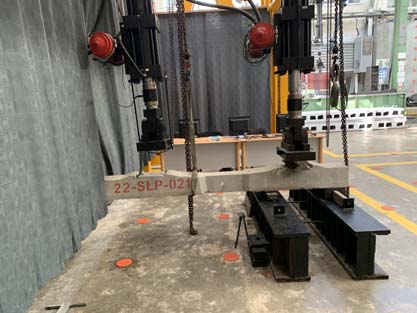
Full-scale ballasted railway track experiments

Full-scale ballasted railway track experiments at İTÜ YDMLab (İTÜ Yapı ve Deprem Mühendisliği Laboratuvarı) focus on simulating real-world train axle loads and vibrations on ballast and slab trackbeds. Conducted in their 1688 m² test facility, these advanced experiments utilize massive reaction floors and dynamic actuators to accurately replicate high-speed rail dynamic conditions and long-term track settlement
Experimentalsetupandinstrumentationofafull-scaleballastedrailwaytracktest
      Slepeer Test

  • Rail seat positive bending moment test
  • Electrical resistance test
  • Rail seat dinamic test
  • Rail seat fatigue test
  • Center negative bending moment test
  • Vertical uplift test
  • Longitudinal rail restraint test
ARI-I Shaking Table

To perform real-time dynamic experiments, the uni-axis "ARI-I Shaking Table" with a plan size of 2.35 X 2.35 m was put into service in 2014. The project budget of US$ 250,000 was provided by 19 individuals and organizations, most of whom are ITU graduates. The shaking table, whose original design and production in terms of mechanics, electricity, hydraulics, and software were carried out in our country, has been used effectively since it entered into service.
ITU Faculty of Civil Engineering
Structural and Earthquake Engineering Laboratory

News Archive